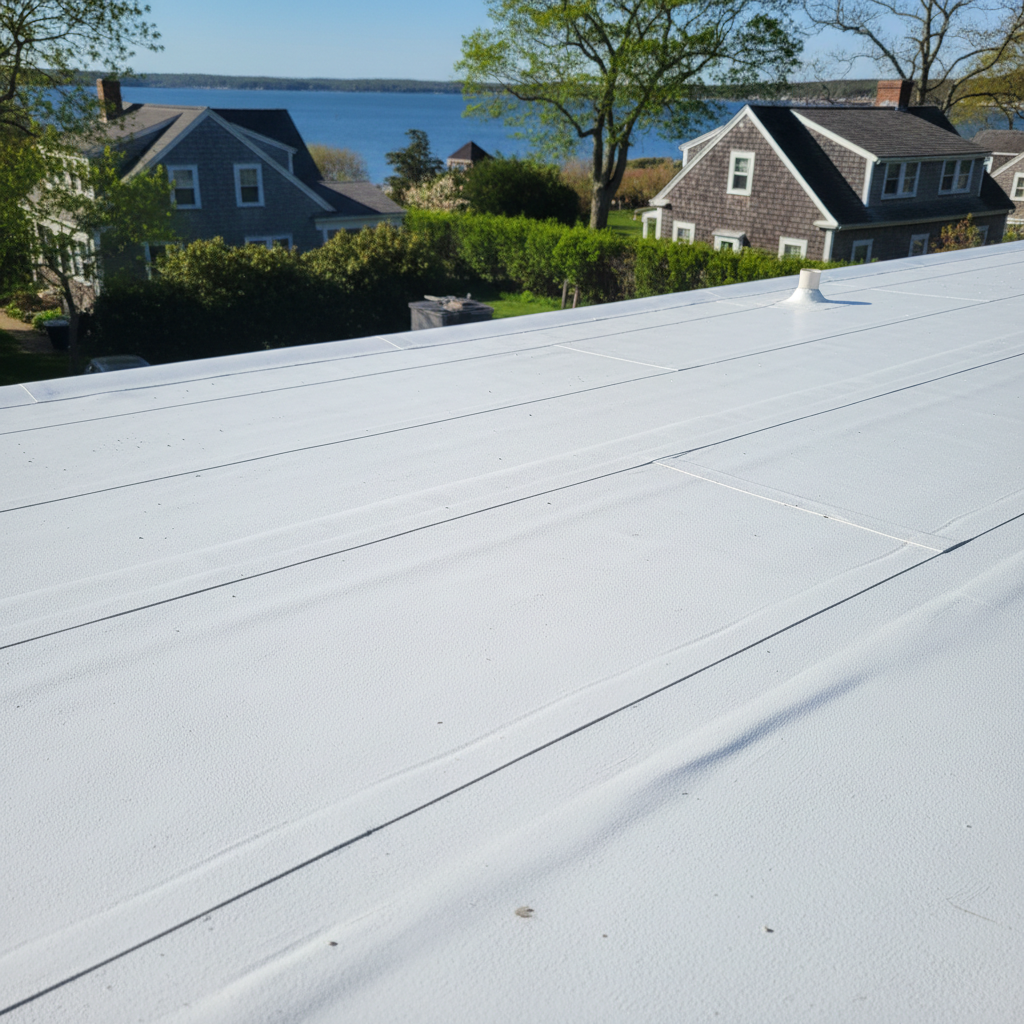
You are looking at TPO roofing for your flat or low-slope roof here in Bristol. This might be for your garage, an addition, or even your main house if it has that kind of roofline. TPO, which stands for Thermoplastic Polyolefin, is a popular choice. It is especially common for commercial buildings, but it is also becoming popular for residential projects for good reasons. TPO roofing is durable as well as energy-efficient as well as generally cost-effective.
You are a homeowner, not a roofing contractor. You want to know what you are getting into with TPO roofing. Here at Heritage Roofing & Siding, we have installed a lot of TPO roofing. Our team has also seen TPO roofing removed. We will give you the straight information on what you need to know before, during, and after a TPO roofing project in Bristol.
Before the Project: Getting Your Ducks in a Row
TPO is a single-ply membrane. This means it is one big sheet of material. It is usually white, and it gets installed over your roof deck. The white color is not just for looks. It reflects a lot of sunlight, which helps keep your home cooler in the summer. This can save you money on your AC bills here in Bristol.
Do Your Homework on the Roofer (Important!)
This is an important step you can take for your TPO roofing project. TPO's biggest strength is its heat-welded seams. These seams can also be its biggest weakness if they are not done correctly. A good TPO roof relies on proper substrate preparation. It also relies on consistent hot-air welding as well as careful flashing around anything sticking out of your roof. If those welds are not perfect, you could have leaks later on.
Ask potential contractors about their experience with TPO roofing specifically. How long have they been installing TPO roofing in Bristol? What kind of training do their crews have for TPO roofing installations? Do they offer manufacturer warranties, and what does that cover for your TPO roofing? A reputable roofer will be happy to answer these questions. Do not just go for the cheapest bid for your TPO roofing project. A bad TPO installation will cost you more money in the long run.
Understand Your Roof's Needs
TPO roofing is best for flat or very low-slope roofs. If your roof has much of a pitch, TPO roofing is probably not the right material. You will also want to consider the thickness of the membrane. TPO roofing comes in different thicknesses. These are usually 45, 60, or 80 mil. Thicker membranes generally offer better puncture resistance. They can also last longer, especially if you expect any foot traffic on the roof. This is also important if we get some wild weather here off Narragansett Bay in Bristol.
What You Can Realistically Do Beforehand:
- Clear the area: Make sure the roof and surrounding areas are clear of debris. This includes plants or anything that might get in the way of your TPO roofing installation.
- Research: Get familiar with TPO roofing's pros and cons. This way you will know what to expect.
- Get multiple quotes: Remember what we said about the cheapest bid for your TPO roofing!
During the Project: What to Watch For
You will not be up there with a heat gun. You should not be up there with a heat gun for your TPO roofing project. TPO roofing installation requires specialized tools as well as expertise. You can still be an informed homeowner in Bristol.
The Installation Process (Briefly)
The crew will first prepare the roof deck. They will make sure it is clean as well as dry as well as sound. Our team might install insulation boards or a cover board over the deck. Then, the TPO membrane gets unrolled and secured. This can be done by mechanically fastening it with screws and plates. It can also be done by fully adhering it with a bonding adhesive. The important step is heat-welding the seams together with a special machine for your TPO roofing.
What You Can (and Should) Observe:
- Cleanliness: A good crew keeps a tidy workspace during your TPO roofing project.
- Communication: They should keep you informed about progress. They should also tell you about any unexpected issues.
- Attention to detail: Pay attention to how they handle edges and penetrations. This includes vents or pipes. These are common spots for problems if they are not done right.
- No shortcuts: If something looks rushed or sloppy, you should speak up.
After the Project: Keeping Your TPO Roof in Top Shape
Once your new TPO roof is installed, the hard part is over for you. It needs a little care to last, like any part of your home in Bristol.
Regular Inspections (DIY Friendly)
You should inspect your TPO roof at least twice a year. You might need to inspect it more after a big storm. This is especially true with the strong winds we sometimes get whipping through Bristol. Look for these things:
- Debris: Clear off leaves, branches, or anything else that has accumulated on your TPO roof.
- Ponding water: TPO roofs are low-slope. Some water might sit, but it should not be there for days. If it is, that means there is a drainage issue.
- Seams: Check for any signs of separation. Also look for lifting or curling of the seams.
- Punctures or tears: These can happen from falling debris or foot traffic on the TPO roof.
- Flashings: Look at the areas around vents. Also check skylights or the edges of the roof for any signs of damage or pulling away.
Wear soft-soled shoes when you are on the roof. Be careful. TPO can be slippery when it is wet.
Cleaning Your TPO Roof (DIY with Care)
TPO roofs are pretty low maintenance when it comes to cleaning. A mild detergent, water, and a soft-bristled brush or broom are usually all you need. Do not use harsh chemicals or a high-pressure washer. These can damage the membrane and void your TPO roofing warranty.
When to Call a Pro:
Any significant damage needs professional attention. This includes a puncture, a tear, or a failing seam on your TPO roof. Do not try to patch it yourself with some caulk. You could make the problem worse. You should also consider an annual professional inspection. Our team can catch small issues before they become big as well as expensive problems for your TPO roofing in Bristol.
A TPO roof can be a fantastic as well as long-lasting solution for your Bristol home's flat roof. Just make sure you start with a good contractor. Keep an eye on it over the years. It is an investment that will pay off in energy savings as well as comfort.